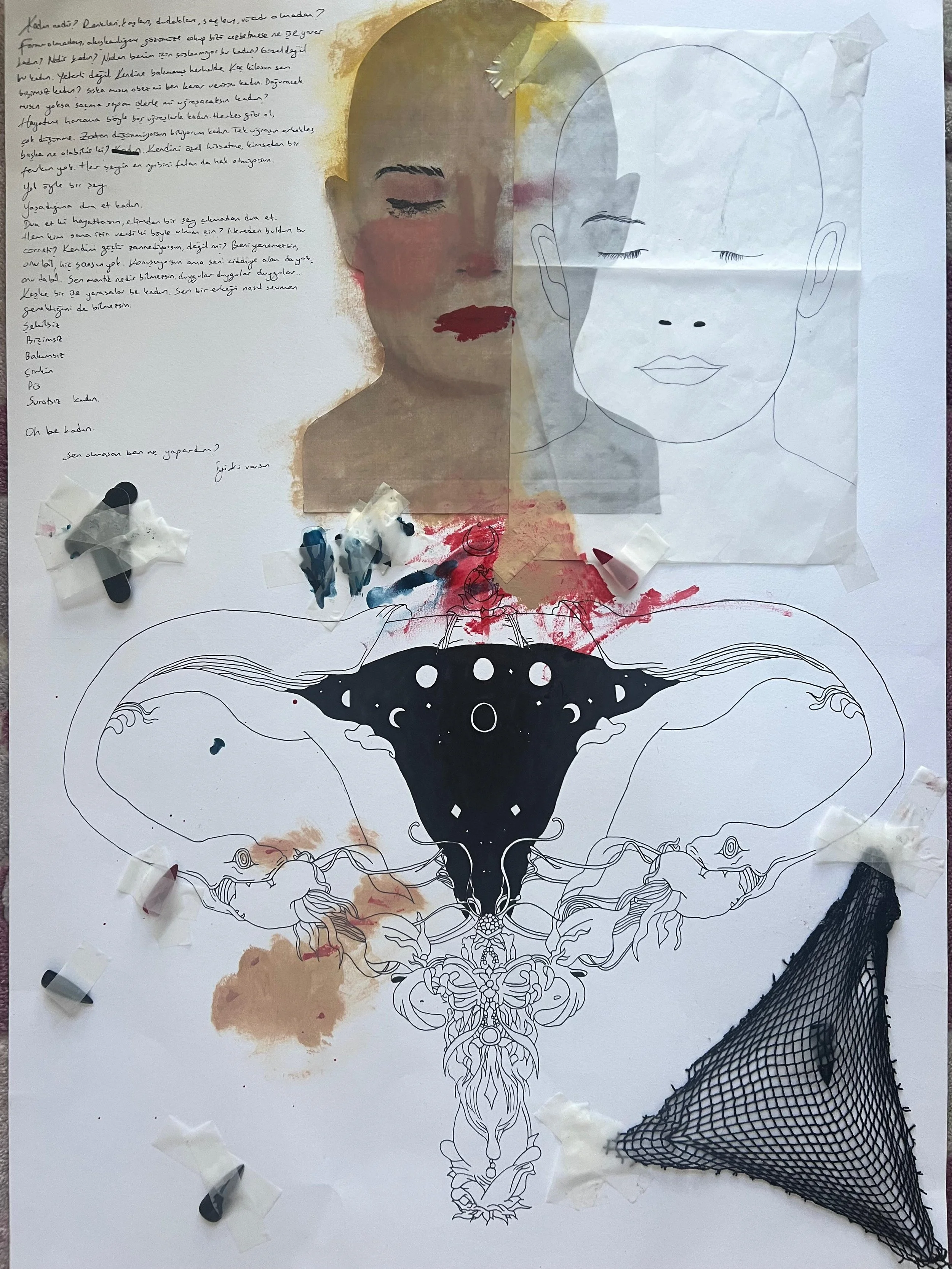
KADIN: SEVGİ I NEFRET
The face on the left, rendered with paint and makeup, feels more emotional, fragile, and "real." The linear portrait on the right, however, evokes a more mechanical, sterile, "idealized" identity. The two superimposed images reflect the contradictory relationship the person has with themselves. The womb form at the bottom is both anatomical and mythological. The black area within and the moon symbols represent the cyclical nature of woman, the transitions between light and darkness, fertility, and spiritual layers. The taped fragments symbolize a kind of attempt at repair, a bandage for wounds, and unfinished processes. The makeup, paint, and stains can be associated with experiences imprinted on the body, shame, guilt, blood, menstruation, trauma, and transformation. The black mesh fabric piece represents intimacy, femininity, eroticism, and the duality of fragility and strength. The writing at the top is like the emotional backbone of the work; an internal monologue, a self-reckoning, a confrontation with the past, the body, and "being a woman." The handwriting elevates the work to the level of a diary or confession. This makes the study more personal, more honest.